Chimney Waterproofing in Cornwall, NY
Chimney waterproofing for homes in Cornwall, NY. Done with the right product on sound masonry it slows deterioration for years. Done with the wrong one it causes the damage it was meant to prevent.
- Licensed & Insured
- Certified technicians
- Serving Cornwall & the Hudson Valley
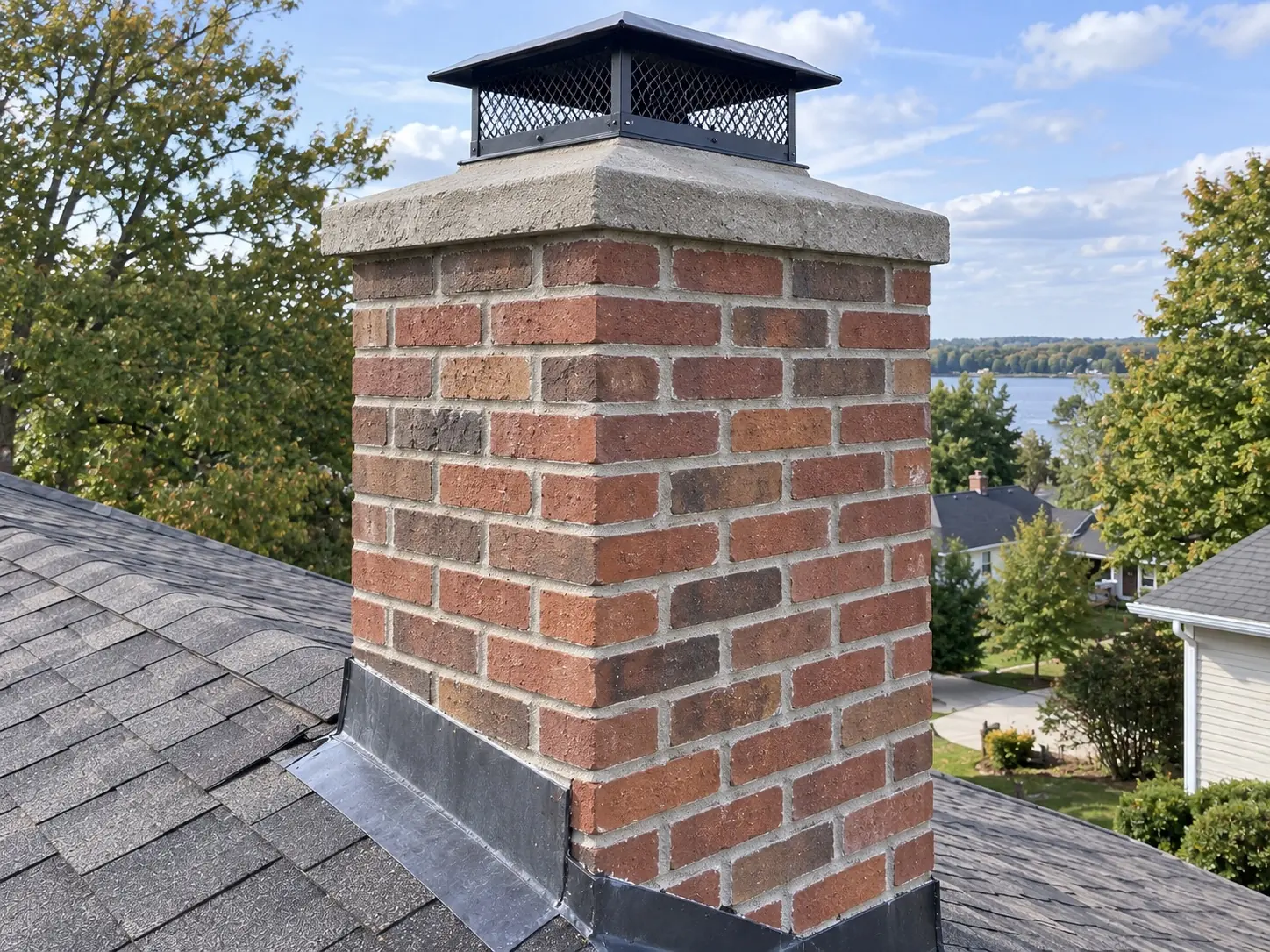
Why brick needs help shedding water
Brick and mortar are porous by design. They absorb water, hold it, and release it again as they dry. On a wall protected by eaves and warmed from inside, that cycle is harmless. On a chimney it is not — the chimney stands clear of the roof with weather on every face, nothing sheltering it, and no heat behind it outside the burning season.
So it soaks up rain and holds it. Then it freezes. Water expands as it turns to ice and forces the brick and mortar apart from the inside, a fraction at a time, every freeze. Over a Hudson Valley winter that happens repeatedly, and over enough winters the brick faces spall off and the joints open up.
Waterproofing interrupts the first step. If the masonry does not absorb the water, there is nothing inside it to freeze.
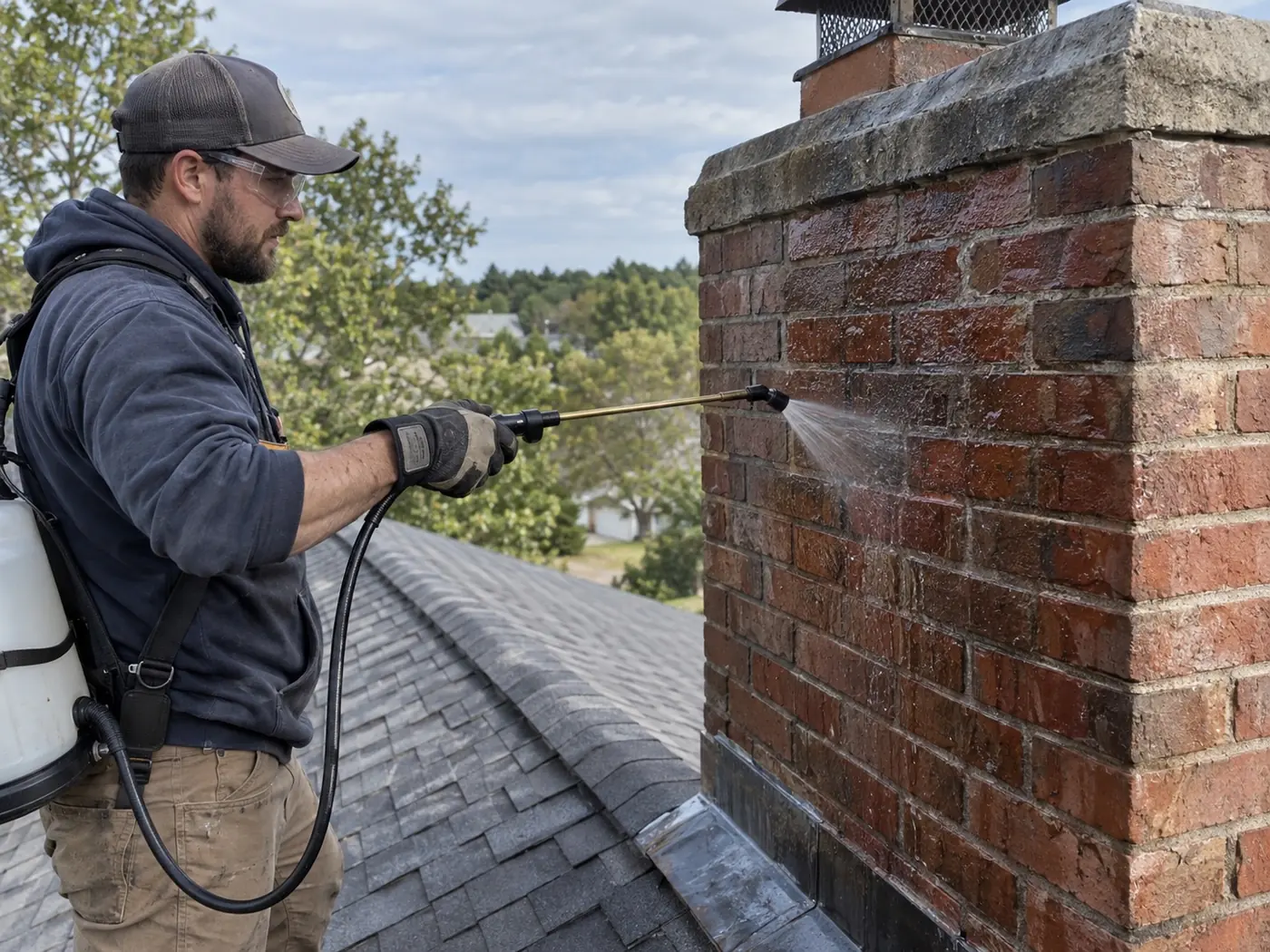
The part that gets done wrong: which product
There are two very different things sold as masonry waterproofing, and using the wrong one on a chimney causes the damage it was supposed to prevent.
Film-forming sealers
Acrylics, silicone resins, paint-like coatings and anything that leaves a visible sheen. These form a barrier across the surface. They stop water getting in — and they stop water getting out. A chimney is never completely dry: moisture reaches the masonry from flue gases, from the interior of the structure, and from whatever is already in there. Seal the outside with a film and that moisture is trapped behind it. It freezes under the coating, pushes the face off the brick, and takes the coating with it.
Vapour-permeable water repellents
Siloxane and silane-based products penetrate into the masonry rather than sitting on top of it, and line the pores so liquid water cannot be drawn in — while leaving those pores open so water vapour can still escape. Rain runs off; the chimney still dries out. That is what a chimney needs.
If a masonry product is glossy, film-forming, or described as a sealer rather than a repellent, it does not belong on a chimney. A correct application changes how the masonry sheds water, not how it looks.
When waterproofing is the right call — and when it is not
It is worth doing on masonry that is fundamentally sound: joints intact, brick faces in good condition, crown sound, flashing correct. At that point you are protecting something that is working, and slowing the clock on deterioration that has not started yet. It makes most sense immediately after repointing or a rebuild, when the masonry is at its best and you want to keep it that way.
It is the wrong move on masonry that is already failing. Sealing a chimney with open joints, spalled brick, a cracked crown or an active leak traps the water that is already inside. The freeze damage then happens behind the treatment where you cannot see it, and the first sign is a larger repair than the one you avoided.
The order is always: find and fix the water entry, repair the masonry, then waterproof. Skipping to the end is how chimneys get worse expensively.
Related services
What the work involves
-
Assessment first
The masonry is checked for joints, spalling, crown condition and flashing. If repairs are needed, they come first — we will tell you if waterproofing today would be a waste of your money.
-
Surface preparation
The masonry must be clean and dry. A repellent applied to a wet chimney, or over surface contamination, does not penetrate properly and does not last.
-
Application to saturation
A vapour-permeable repellent is applied so it penetrates rather than coats, working from the bottom up with sufficient material that it runs down the face. Under-applying is the other common failure.
-
Crown and cap checked
A water repellent treats the vertical masonry. It does not fix a cracked crown or a missing cap, so those are confirmed sound as part of the job rather than assumed.
How long does chimney waterproofing last?
Manufacturers of vapour-permeable repellents typically state service lives measured in years rather than decades, and exposure matters — a chimney taking driven rain from an open aspect will need re-treating sooner than a sheltered one.
Will it change how the chimney looks?
A correct vapour-permeable repellent should not leave a gloss or a colour change. If a treated chimney looks wet or shiny afterwards, a film-forming product was used.
Can I do it myself with something from the hardware store?
You can buy repellents retail. The two things that decide whether it works are choosing a vapour-permeable product rather than a sealer, and applying enough of it to penetrate. Most failed DIY treatments fail on one of those two points — and neither helps if the masonry needed repair first.
Does waterproofing stop a leak?
Only if the leak is the masonry absorbing rain through its whole surface. If water is entering at the flashing, the crown or an open flue, waterproofing will not touch it.
Our other chimney services
Chimney waterproofing in Cornwall and nearby towns
Waterproofing is worth doing wherever brick sits out in a Hudson Valley winter, which is all of the towns below.
Check the masonry is ready to be sealed
Waterproofing works on sound brick. We will tell you if repairs need to come first.