Chimney Inspection in Cornwall, NY — $69
A chimney inspection for homes in Cornwall, NY: a full assessment of the flue, liner, firebox, damper and accessible masonry, with camera work where the flue has to be seen from the inside.
- Licensed & Insured
- Certified Technicians
- Inspection $69
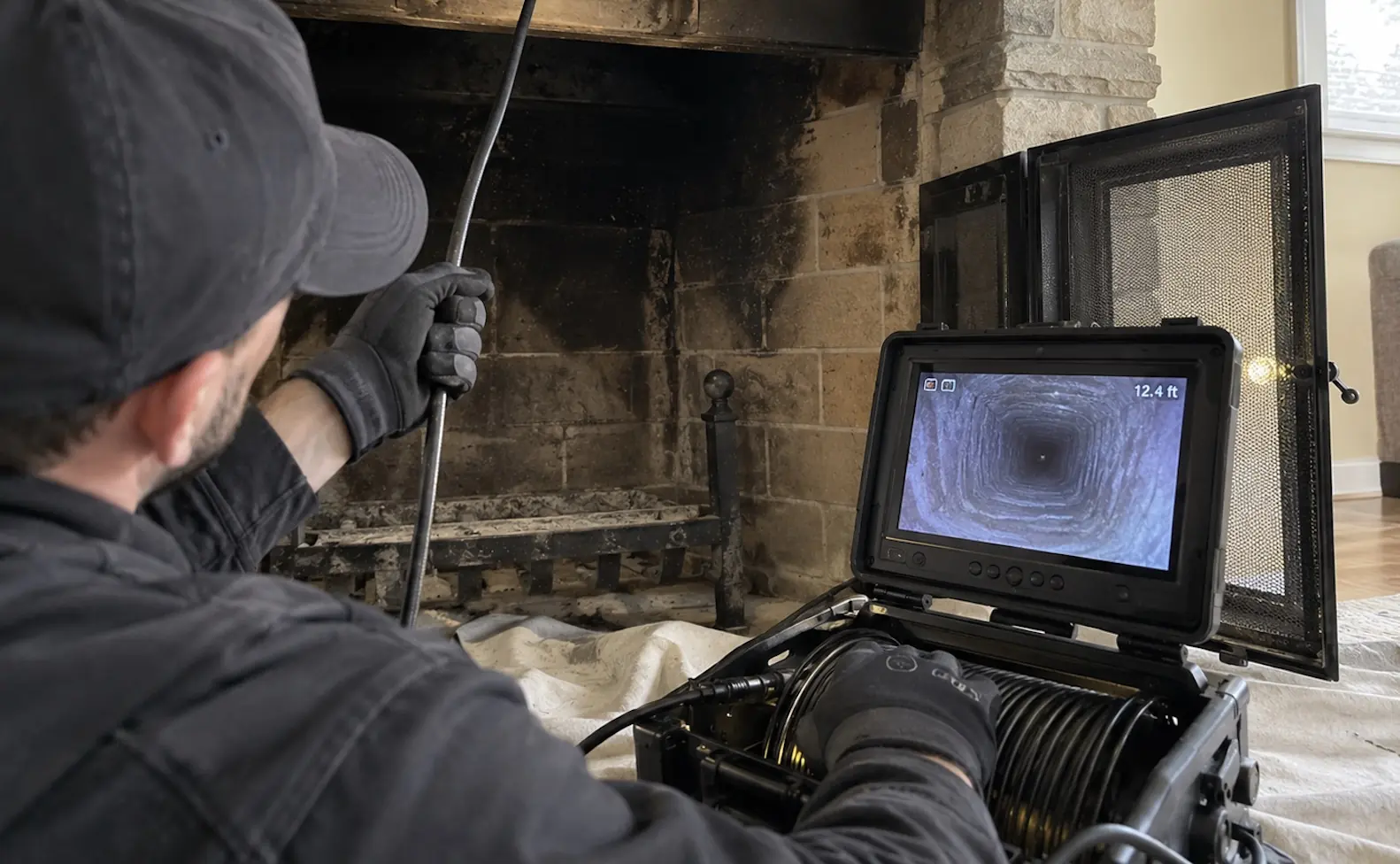
A look at the system, not a glance up the flue
The inspection is a full look at the system rather than a glance up the flue: the firebox and hearth, the damper and smoke shelf, the smoke chamber, the full length of the flue and its liner, the crown and cap, the flashing where the chimney meets the roof, and the accessible exterior masonry. Where the flue cannot be assessed properly from either end, it gets scanned with a camera.
You get told what was found in plain terms — what it is, what causes it, whether it is a safety issue, and whether it needs doing now or can be watched.
- 01Firebox and hearthCondition of the masonry you can actually see and stand in front of.
- 02Damper and smoke shelfOperation, corrosion and the debris that collects on the shelf.
- 03Smoke chamberThe transition above the damper, where deposits build up first.
- 04The full length of the flue and its linerTop to bottom — not the few feet visible from either end.
- 05Crown and capThe two components that decide how much water enters the structure.
- 06Flashing where the chimney meets the roofThe most common entry point for water that shows up on a ceiling.
- 07Accessible exterior masonryJoints, brick faces and any movement in the stack.
- 08Camera scan where the flue cannot be assessed from either endIncluded when it is the only honest way to see the middle.
The three inspection levels, and which one you need
NFPA 211 — the standard covering chimneys, fireplaces, vents and solid fuel burning appliances — defines three levels of chimney inspection. The level is not an upsell ladder. It is decided by what has happened to the chimney.
The routine annual inspection
Readily accessible parts of the chimney exterior and interior, the accessible portions of the appliance and the connection between them. It confirms the structure is sound, the flue is clear of obstruction and combustible deposits, and the system is suitable for how you use it. This is the right level if you are using the same appliance the same way as last year.
Everything in a Level 1, plus a camera scan of the flue
A Level 2 inspection is called for when the system changes or the property does. The usual triggers:
- The property is being sold or transferred to a new owner
- The fuel is changing — oil to gas, or a wood stove going into an existing fireplace
- The appliance is being replaced, including a new furnace or boiler
- The flue shape, size or material is being altered
- There has been a chimney fire, a chimney quake, a lightning strike or a weather event
- The system has malfunctioned or performed badly and the reason is not obvious
It includes everything in a Level 1, plus accessible areas of attics, crawl spaces and basements the chimney passes through, and a camera scan of the flue. That last part is the point of it. Cracked tiles, gaps at the joints, a breach into an adjacent void, a previous repair that was never finished — none of it is visible from the top or the bottom of a flue. It is visible on camera.
Opening the structure up to see what is behind it
When a Level 1 or 2 gives real reason to suspect a hazard concealed behind the structure, a Level 3 inspection opens it up — removing a section of masonry, a chimney crown or an interior wall to see what is behind it. It is uncommon, and it is not done casually or without discussing it with you first.
A general home inspection is not a chimney inspection, and most home inspectors say so themselves in their own reports. Here is what a Level 2 inspection finds before a sale that a walkthrough will not.
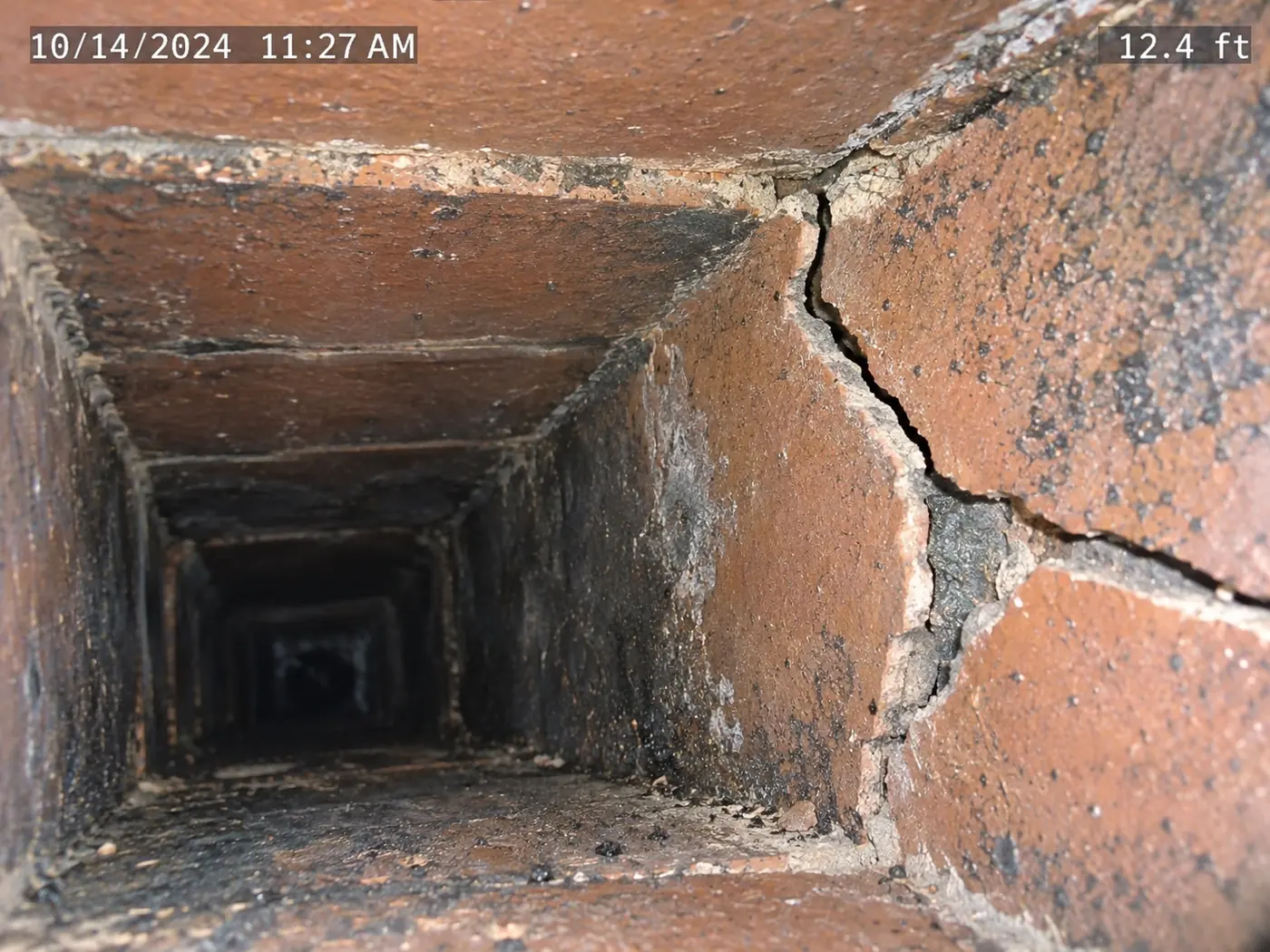
The part of a flue nobody can see
A flue is a tall, narrow, dark shaft. From the firebox you can see a few feet. From the top you can see a few feet. The middle — where clay tiles crack, where mortar joints between tiles wash out, where a previous liner was cut short — is the part nobody sees without putting a camera in it.
The failures that matter most are in that middle section. A cracked liner lets flue gases and sparks reach framing and insulation that was never meant to be near them. That is the mechanism behind most serious chimney fires, and it is invisible from both ends.
If a scan finds a liner that has failed, the fix is relining. If it finds deteriorated masonry above the roofline, that is masonry repair. Either way you will know what you are looking at before deciding anything.
Inspection questions
How long does an inspection take?
It depends what is found. A straightforward Level 1 on a single flue is quick; a Level 2 with a camera scan on a multi-flue stack takes considerably longer because every flue is scanned separately.
Do I need an inspection and a sweep, or just one?
They serve different purposes. Sweeping removes deposits; inspection assesses condition. A flue heavy with creosote often cannot be properly assessed until it is swept, so on a dirty system the sweep comes first.
Is an inspection required to sell a house?
NFPA 211 calls for a Level 2 inspection when a property changes hands. Whether it is enforced in your transaction depends on the parties involved, but a flue defect found after closing becomes the buyer's problem and an expensive surprise.
We just had an oil-to-gas conversion done. Does that need an inspection?
Yes — a fuel change is one of the specific triggers for a Level 2 inspection. Gas appliances vent cooler, wetter flue gases, and a flue sized for the old appliance is usually wrong for the new one.
What if nothing is wrong?
Then you have that in writing and a baseline for next year. An inspection that finds nothing is a legitimate result, not a wasted visit.
Our other chimney services
Chimney inspection in Cornwall and nearby towns
The $69 inspection is the same visit wherever the house is. These are the towns around Cornwall with their own page.
Book a chimney inspection
You will know the condition of the flue, liner, firebox and masonry, and what — if anything — needs doing.