Chimney Repair in Cornwall, NY
- Licensed & Insured
- Certified technicians
- Serving Cornwall & the Hudson Valley
Start with what you can see
Almost every chimney repair starts with one of a handful of symptoms. Each one points somewhere specific. Find yours below and follow it through.
What we repair
- Chimney liners and relining Cracked, shifted or missing liners; stainless relining; and flue sizing for a replacement furnace or a fuel conversion. View
- Masonry, repointing and rebuilding Repointing failed joints, replacing spalled brick, rebuilding crowns, and rebuilding above the roofline where the structure is past repair. View
- Leak and flashing repair Establishing where water actually enters, then correcting it — flashing, crown, cap or masonry absorption. View
- Waterproofing Preventive vapour-permeable sealing for sound masonry, so the brick sheds water without trapping it. View
Why chimneys fail here
Three things account for most of the chimney repair work in this part of the Hudson Valley, and they compound each other.
Age. New York has the oldest owner-occupied housing stock in the country, and the river towns around Cornwall are older than most of the state. Plenty of chimneys in the area were built for an appliance nobody has used in fifty years.
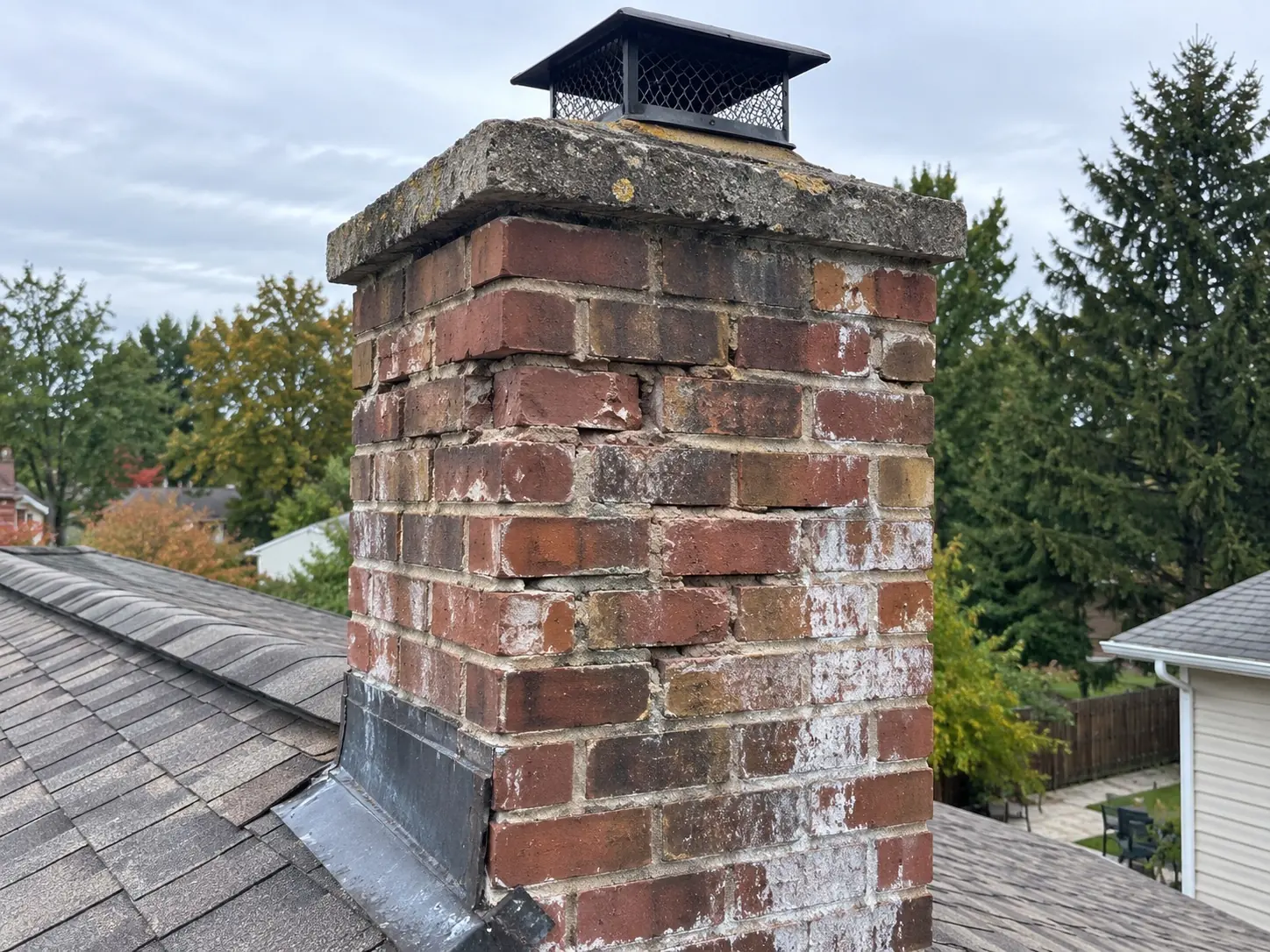
Water and frost. Masonry absorbs water. Repeated freezing splits brick faces and opens joints. It is slow, it is cumulative, and it is the single biggest cause of the masonry damage we are called out to. The mechanism is worth understanding because it changes what the right repair is.
Appliance changes. Oil and propane heating are common here, and when a furnace is replaced or a fuel is switched, the flue attached to it is frequently the wrong size or the wrong material for the new appliance. The chimney then damages itself from the inside with condensation.
We have written up the topics that come up most often in the advice section.
Repair questions
Can you tell me what it will cost over the phone?
Not honestly. Chimney repair prices depend on access, height, the extent of the damage and what is found once work starts. What we can do is inspect it first and tell you exactly what the chimney needs before you commit to anything.
Is this urgent or can it wait until spring?
It depends on the symptom. A failed liner on a flue you are actively using is a safety issue now. Cosmetic spalling on an unused flue can usually wait for better weather — and masonry work done in freezing conditions is worse work anyway.
Do you repair the chimney or replace it?
Whichever is honest for the condition. Repointing sound brick is routine. Where the brick itself has gone, or the structure has shifted, rebuilding the affected section is the only repair that lasts.
Can I just seal it and be done?
Sealing a chimney that is already letting water in traps the water inside, and that makes freeze damage worse rather than better. Waterproofing is for masonry that is already sound.
Our other chimney services
Chimney repair in Cornwall and nearby towns
The symptom list above applies to any masonry chimney in this climate. These are the towns around Cornwall we cover.
Not sure which repair you need?
Describe the symptom over the phone and we will tell you what it usually points to before anyone comes out.