Chimney Masonry Repair in Cornwall, NY
Chimney masonry repair in Cornwall, NY. A chimney is the most exposed masonry on the house, and everything that damages brickwork reaches it first.
- Licensed & Insured
- Certified technicians
- Serving Cornwall & the Hudson Valley
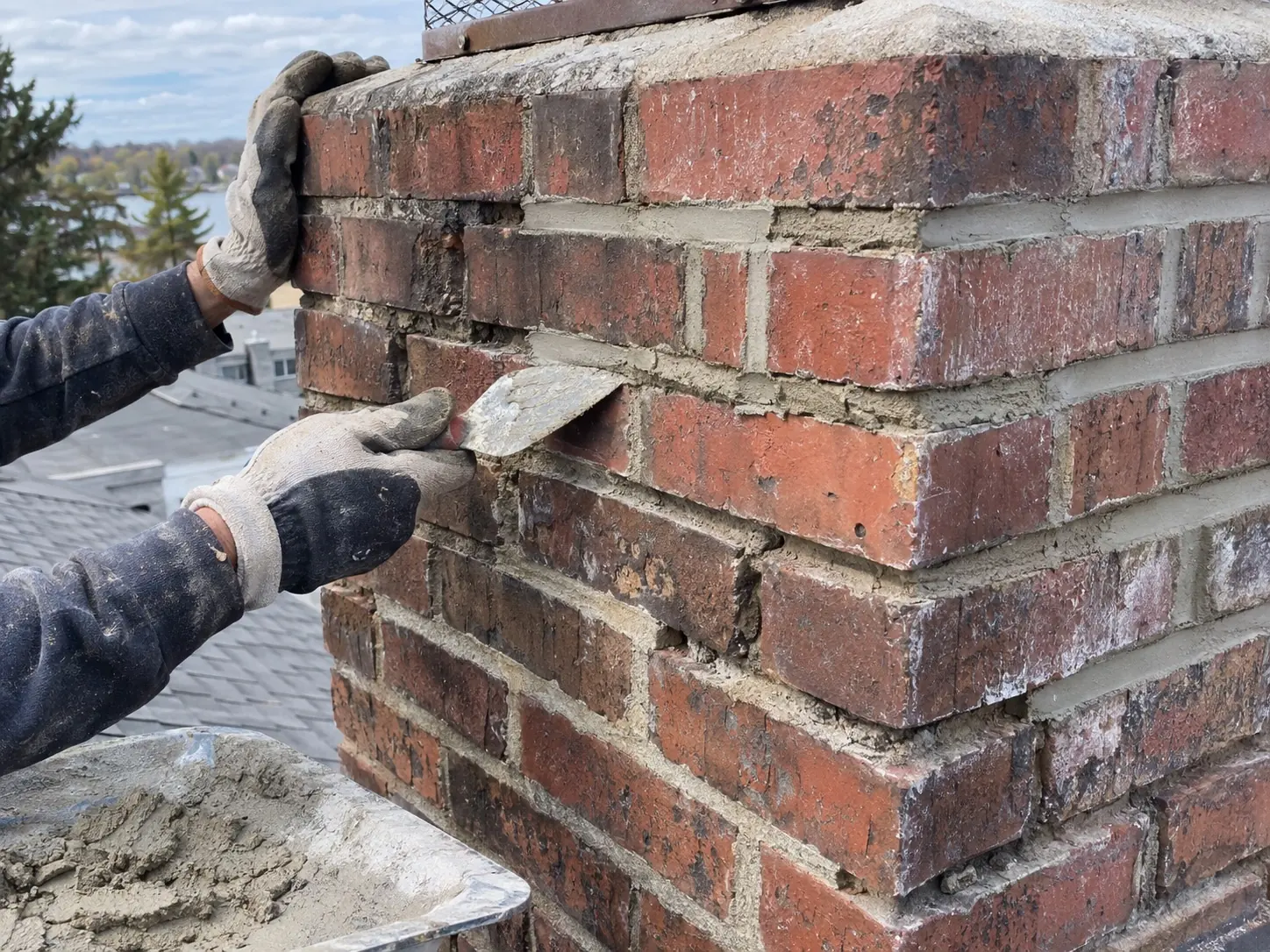
How masonry chimneys come apart
A chimney is the most exposed masonry on a house. It stands above the roofline with weather hitting all four sides, no heat behind it for most of the year, and a horizontal top surface that collects every drop of rain that lands on it. Everything that damages masonry hits a chimney first and hardest.
The process is almost always the same. Water gets into the brick and the mortar. Winter cycles it above and below freezing. Each freeze expands the trapped water and forces the material apart a little more. Mortar joints recede, brick faces spall off, and once the face is gone the exposed brick soaks up water faster than before. The damage accelerates on its own.
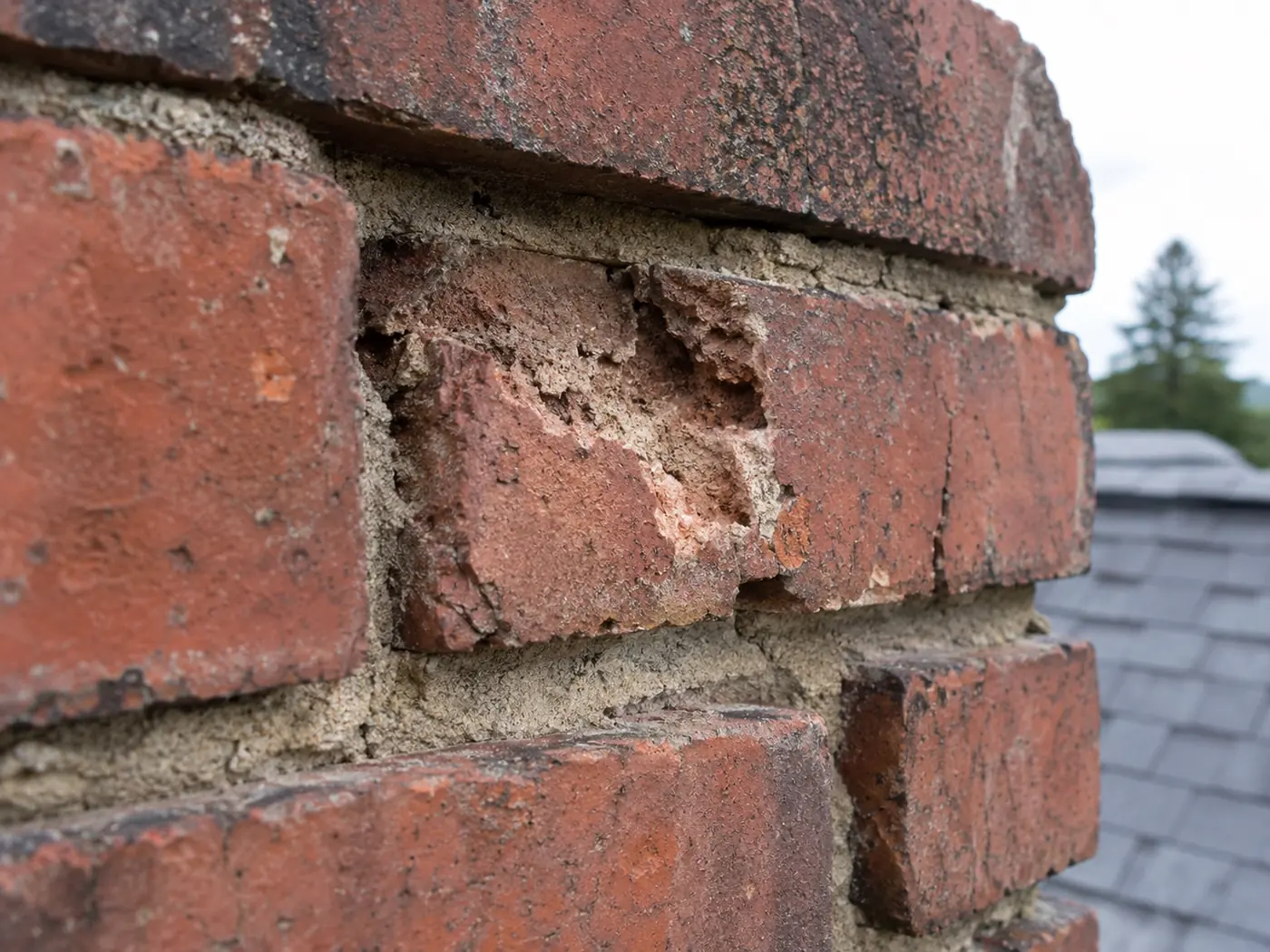
Which is why a chimney that looked acceptable three years ago can look alarming now. It is not sudden — it is a curve. The full mechanism is here.
Repointing
Repointing means cutting out the deteriorated mortar from the joints to a proper depth and packing in fresh mortar. Done at the right time it is straightforward, durable work, and it is the single most cost-effective thing you can do for a masonry chimney.
Two things determine whether it lasts.
Depth. Smearing new mortar over the face of a failed joint is not repointing. The old mortar has to be cut back until sound material is reached, or the new work sits on a soft base and falls out.
Mortar hardness. This matters enormously on older buildings and it is the mistake that does lasting damage. Mortar is meant to be softer than the brick around it — it is designed to be the sacrificial element that wears and gets replaced. Repoint a soft historic brick with a hard modern high-cement mortar and the mortar stops giving. Every bit of expansion, movement and freezing then has to go somewhere, and it goes through the brick instead. The joints survive and the brick faces destroy themselves. On the older housing common around Cornwall and the river towns, matching the mortar to the masonry is not a detail, it is the job.
Brick replacement and rebuilding
Where brick faces have spalled off, the brick has to be replaced. A spalled face cannot be reattached and filling it with mortar produces a patch that holds water against the surrounding brick.
A partial rebuild — taking the chimney down to sound masonry, usually at or just above the roofline, and rebuilding from there — is the right call when the damage is concentrated in the exposed upper section, which is where it usually is. The sound lower portion stays.
A full rebuild is a much bigger job and is reserved for structural failure: a chimney that has shifted, separated from the house, cracked through, or deteriorated below the roofline.
Deciding between repair and rebuild
Honest indicators that repointing is no longer the answer:
- Mortar loss is deep rather than surface, across most joints rather than a few
- A significant number of brick faces have already spalled
- The chimney leans, bows, or has separated from the roofline
- There is a crack running through multiple courses rather than along joints
- The structure has already been repointed once and is failing again quickly
- Brick can be moved by hand, or mortar can be raked out with a finger
Repointing a chimney that needs rebuilding wastes the money twice — once on the repointing, and again on the rebuild that follows a few winters later. We would rather tell you that at the inspection than after the scaffold is up.
Chimney crown repair
The crown is the sloped concrete or mortar slab across the top of the chimney. Its job is to shed water away from the flue and out past the brick below, and it is the most common point of failure on the whole structure — because it is horizontal, because it takes the full weight of every rainfall, and because it is frequently built badly in the first place.
A crown built as a thin mortar wash rather than a proper slab cracks within a few winters. Once it cracks, water runs straight down into the core of the chimney, between the liner and the brick, where nothing sheds it and it freezes.
Symptoms of a failed crown show up below it rather than on it: white efflorescence on the brick, spalling concentrated near the top, damp reaching the firebox, and a leak nobody can trace to the flashing.
Brushing a coating over a cracked crown is a temporary measure at best. The crown needs correct slope, an overhang beyond the brick face, and an expansion joint where it meets the flue tile so that the two can move independently. Without those, the crack comes back.
Related services
After the masonry work
Sound masonry is the precondition for everything else. Once the brick and joints are right, waterproofing with a vapour-permeable product keeps rain out while still letting the chimney dry — and that is what stops the cycle starting again. Applied to damaged masonry it does the opposite, so the order matters.
If the liner was also affected — common after a chimney fire, and common where water has been entering for years — relining is handled alongside the masonry work rather than afterwards.
Can masonry work be done in winter?
Not well. Mortar needs to cure above freezing, and masonry work done in cold conditions is weaker. Emergency stabilisation is one thing; planned repointing and rebuilding belongs in the working season.
How do I know if my mortar joints are bad?
Look for joints that have receded behind the face of the brick, mortar you can rake out with a key or a fingernail, sand collecting on the roof or at the base, and gaps you can see daylight or shadow in.
Is a crown the same as a chimney cap?
No. The crown is the masonry slab across the top of the chimney structure. The cap is the covering over the flue opening itself. They fail differently and they are different repairs, though a chimney often needs both.
Why did my chimney start falling apart after it was repointed?
Frequently because it was repointed with mortar harder than the brick. The joints then stop absorbing movement and the brick faces take it instead. It is a common and avoidable outcome on older masonry.
Our other chimney services
Chimney masonry repair in Cornwall and nearby towns
Freeze-thaw weather treats every exposed chimney in the area the same way. We repair masonry in each of these towns.
Get the masonry looked at before winter
Mortar needs to cure above freezing. Damage noticed now is cheaper to fix in the working season.