Why Hudson Valley Chimneys Crumble: Freeze-Thaw Explained
Chimney Sweep Cornwall NY · Updated September 2026 · All chimney advice
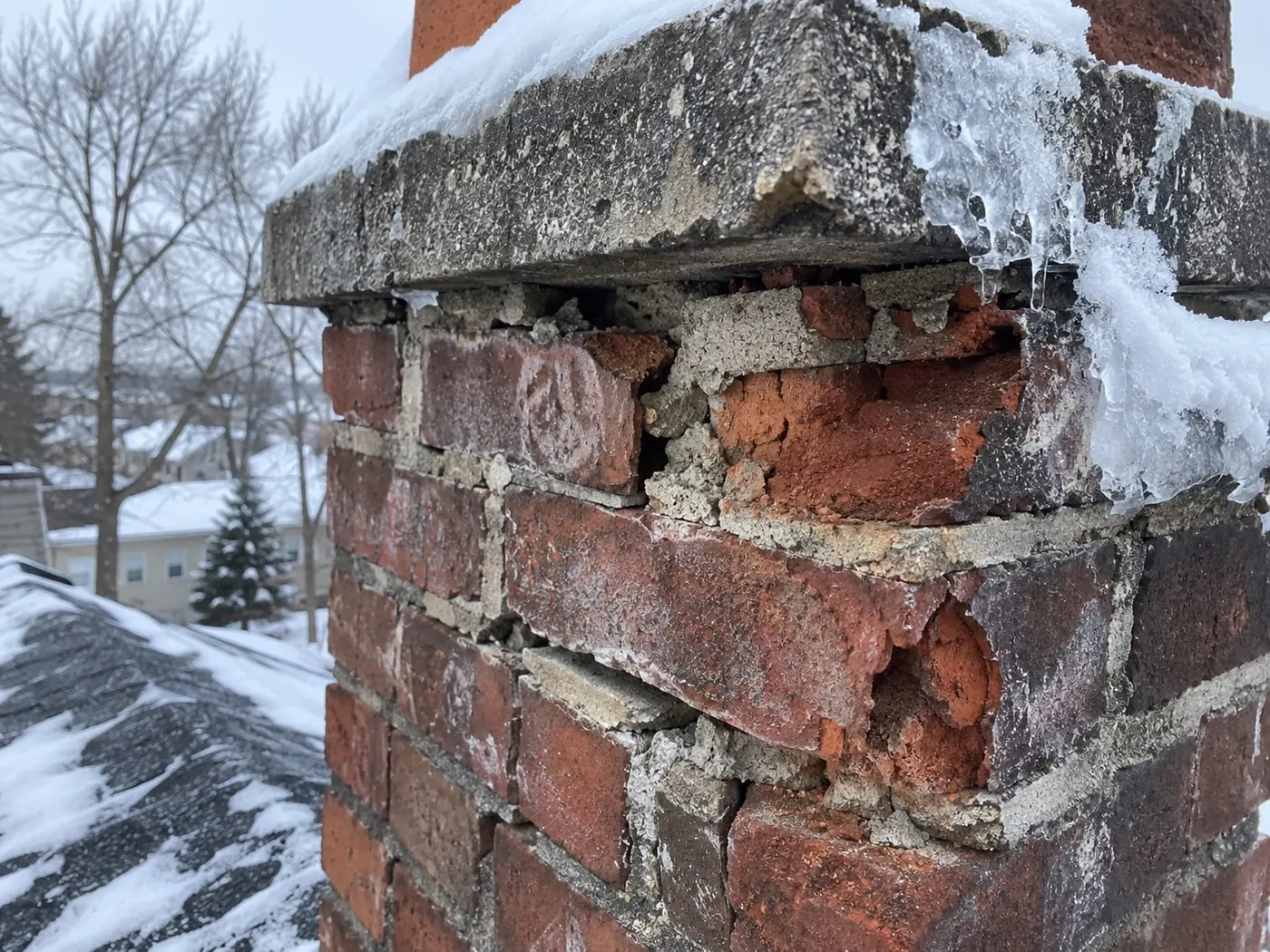
If your chimney is shedding brick faces or dropping mortar onto the roof, this is almost certainly why. It is the most common cause of masonry chimney damage in this climate, and understanding the mechanism changes what the right repair is.
The mechanism
Brick and mortar are porous. They have an internal pore structure that absorbs liquid water and holds it — that is normal and, in most of a building, harmless.
Water expands by roughly nine percent when it freezes. Water sitting inside the pores of a brick has nowhere to expand into, so it pushes outwards against the material around it. One freeze does nothing measurable. Several hundred, over several winters, fatigue the material until the face of the brick separates and falls away — spalling — and mortar joints crumble and recede.
Once a brick face is gone, the newly exposed interior is more porous than the fired outer face was. It absorbs more water, so it freezes more, so it deteriorates faster. The damage curve steepens on its own. This is why a chimney that seemed acceptable a few years ago can look alarming now without anything dramatic having happened.
Why a chimney gets it worse than the rest of the house
Every wall on the building is made of similar material, but the chimney is the part that falls apart. Four reasons, and they compound:
- Exposed on all four sides. No adjoining structure shelters it, and it takes wind-driven rain from every direction.
- Above the roofline. No eaves overhang it and nothing sheds water away from it. It stands in the weather by design.
- No heat behind it. A wall has a warm interior surface that helps drive moisture out. The exposed section of a chimney is cold on both faces for most of the year.
- A horizontal top surface. The crown catches every drop of rain that lands on it. Crack that crown and water runs straight into the core of the structure.
Add a Hudson Valley winter, which does not simply freeze and stay frozen but cycles above and below freezing repeatedly through the season, and the chimney gets far more freeze events than a colder, steadier climate would deliver.
What it looks like, in order
Freeze-thaw damage progresses predictably. Catching it early is the difference between repointing and rebuilding.
-
White chalky staining (efflorescence)
Mineral salts carried out of the masonry by water and left on the surface as it evaporates. It is the earliest visible sign and it means water is moving through the brick. Nothing has broken yet.
-
Receding mortar joints
Joints start to sit back behind the face of the brick. Sand and grit appear on the roof or at the base. Repointing at this stage is routine work.
-
Spalled brick faces
Faces flake, pop or fall away. Affected brick has to be replaced — a face cannot be stuck back on and filling it with mortar holds water against the brick around it.
-
Structural deterioration
Enough material lost that the chimney leans, bows, cracks through courses or separates from the roofline. At this point the affected section has to come down and be rebuilt.
What actually interrupts it
The cycle needs liquid water inside the masonry. Remove that and the freezing has nothing to act on. Everything useful follows from that one fact.
Stop the obvious water entry first. A cracked crown, a missing cap or failed flashing puts far more water into the structure than absorption ever will. Finding the actual entry point comes before anything else.
Repair the masonry. Open joints and spalled faces are how the water gets in now. Repointing and brick replacement restore a surface that sheds rather than absorbs. On older brick the mortar has to be matched to the masonry — repointing soft historic brick with hard modern mortar drives the damage into the brick instead.
Then reduce absorption. A vapour-permeable water repellent lines the pores so liquid water cannot be drawn in, while still letting vapour escape. The product choice matters enormously — a film-forming sealer traps moisture behind it and makes freeze damage worse rather than better.
Fix the entry, repair the masonry, then treat the surface. Sealing a chimney that is already wet inside is the single most common way to turn a repointing job into a rebuild.
Timing
Masonry repair wants to be done in the working season — mortar needs to cure above freezing, and work done in cold conditions is weaker. Which makes late summer and autumn the sensible time to deal with damage you noticed last winter, rather than waiting for it to get through another one.
An inspection will tell you which stage your chimney has reached.