Chimney Relining in Cornwall, NY
Chimney relining for homes in Cornwall, NY. The liner is what keeps heat, sparks and acidic flue gases away from the structure of your house.
- Licensed & Insured
- Certified technicians
- Serving Cornwall & the Hudson Valley
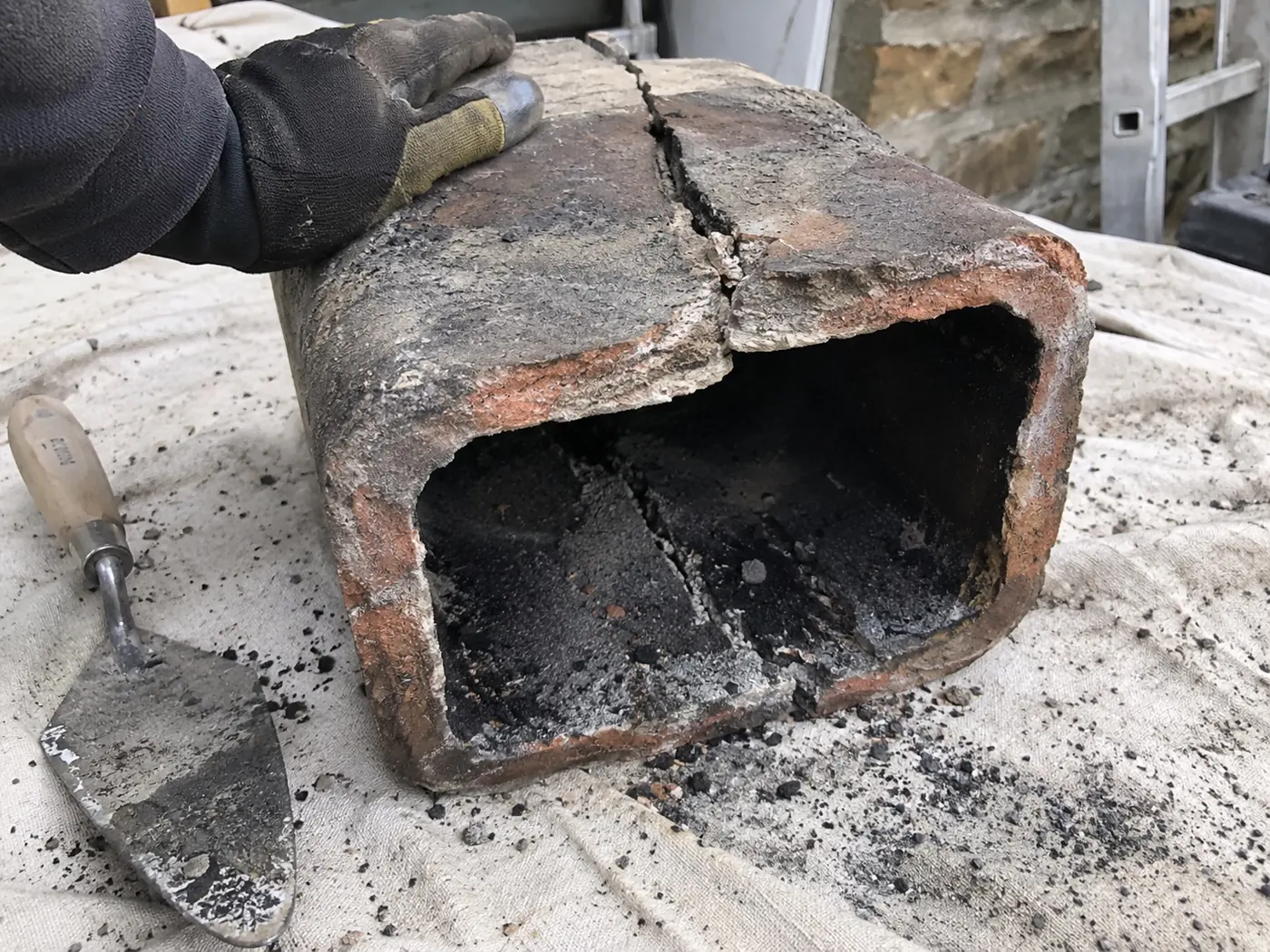
What the liner does, and why it fails
The liner is the sacrificial shaft inside the chimney. Everything the appliance produces — heat, acidic flue gases, moisture, sparks — travels through the liner, not through the brick. Its job is to keep all of that away from the masonry and, more importantly, away from the framing, insulation and wall cavities the chimney passes through.
When a liner fails, that separation is gone. A cracked clay tile or a washed-out joint between tiles is an opening into the chimney structure, and from there into whatever the chimney touches. This is the mechanism behind chimney fires that spread into a house rather than burning themselves out in the flue.
Liners fail in a small number of predictable ways:
- Thermal shock. A chimney fire, or repeated overfiring, cracks clay tile because the tile expands faster than it can cope with.
- Acidic condensation. Flue gases from oil and gas appliances carry moisture and acids that eat the mortar joints between tiles from the inside.
- Water. Rain entering through a failed crown or missing cap washes out tile joints and freezes inside them.
- Movement. Settlement, a chimney quake during a fire, or structural shifting misaligns tiles so they no longer form a continuous shaft.
- There was never one. Plenty of older chimneys in this area were built with no liner at all — just brick and mortar.
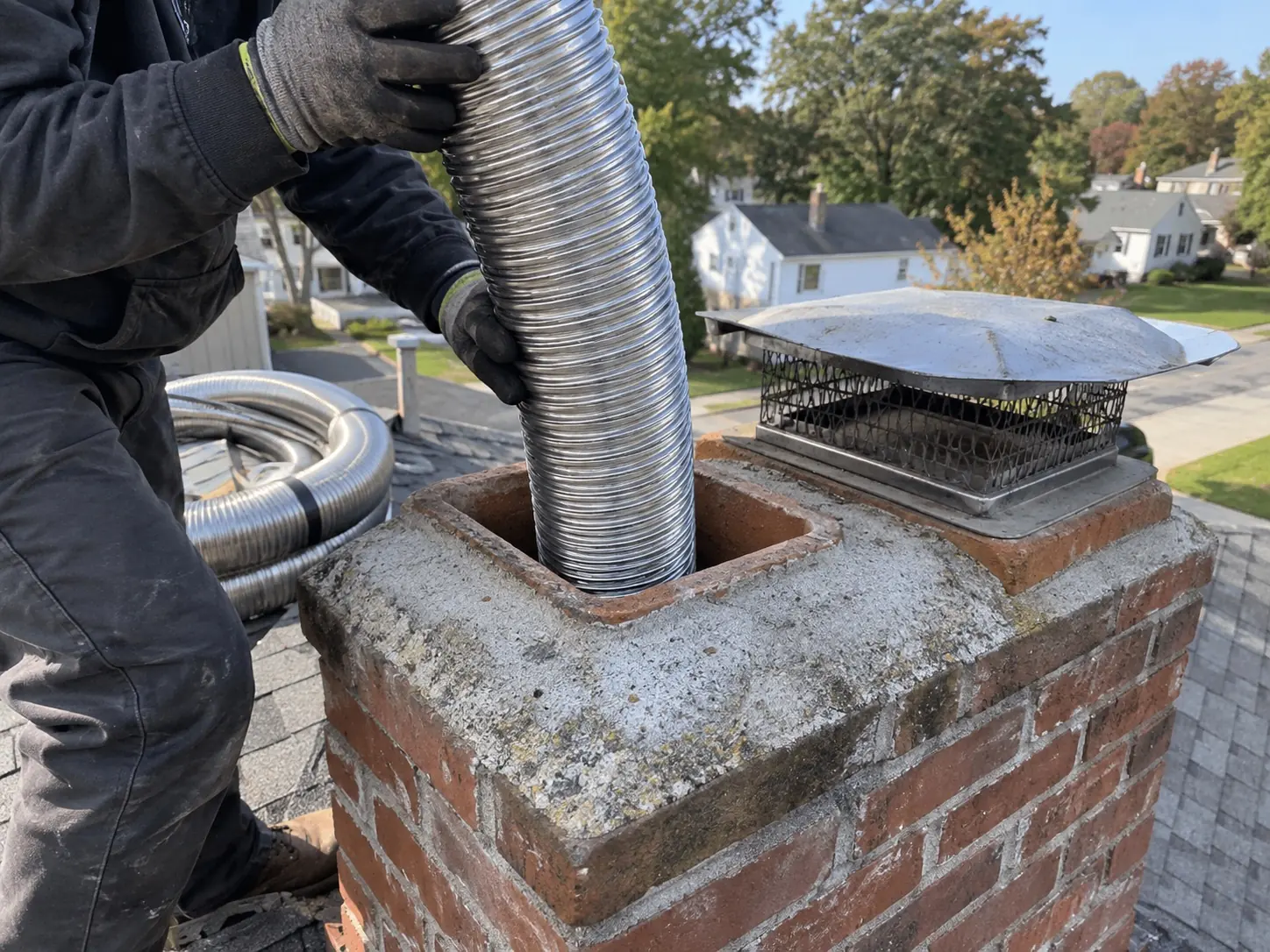
Relining and liner installation
Relining means installing a new continuous liner inside the existing chimney. In practice that is almost always a stainless steel liner, insulated where the application calls for it, run the full height of the flue and connected properly at both ends — sealed to the appliance or fireplace at the bottom and terminated at the top with a crown seal and cap.
Stainless is the usual answer because it can be installed into an existing chimney without rebuilding it, it handles the acidic condensate that destroys clay tile joints, and it can be sized correctly for the appliance rather than being stuck with whatever the original builder used. The grade matters: different alloys suit wood, oil and gas, and the wrong one in the wrong application corrodes.
Relining is also how a chimney that never had a liner is brought up to a safe standard without taking it apart.
Flue sizing: the part that gets ignored
This is the single most common mistake we see on heating appliance flues, and it is worth understanding before anyone quotes you for a liner.
A flue that is too large for the appliance attached to it is a real problem, not a harmless one. Flue gases need to stay hot enough on the way up to exit as gas. In an oversized flue they slow down, cool, and the moisture in them condenses on the walls. That condensate is acidic. It soaks into mortar joints and brick, it freezes in winter, and it takes the chimney apart from the inside — often while the homeowner assumes a bigger flue must be better.
This matters here specifically because oil and propane heating are common across this part of the Hudson Valley, and because modern replacement appliances are far more efficient than the ones they replace. A high-efficiency furnace sends less heat up the flue by design. Drop one onto a flue sized for a forty-year-old boiler and the flue is now badly oversized for it.
The flue should be sized to the new appliance, not inherited from the old one. When a furnace replacement means you need a new liner covers what to check before the old unit comes out.
Furnace, boiler and water heater flues
Heating appliance venting is a different job from an open fireplace, and it is the one people forget about because nobody sits and looks at a furnace flue.
Common situations on heating flues:
- Fuel conversion. Oil to gas changes the flue gas chemistry and temperature completely. The existing flue is rarely correct afterwards.
- Orphaned water heater. When a furnace is upgraded to a direct-vent unit and the water heater is left venting into the old chimney alone, that flue is now enormously oversized for one small appliance.
- Shared flues. Two appliances venting into one flue need that flue sized for the combination, not for either one alone.
- Deteriorated masonry flue. Decades of acidic condensate leave the flue porous and the joints gone, even where the outside of the chimney still looks fine.
A flue serving a heating appliance is a carbon monoxide pathway. If it is blocked, breached or badly sized, the consequences are not confined to the chimney. A camera inspection establishes the actual condition before any decision about relining is made.
Repair, reline, or rebuild
Not every liner problem needs a full reline, and not every chimney is a candidate for one.
Localised repair can be appropriate where a single joint or a short section has failed and the rest of the liner is sound — but it is only worth doing when a camera scan has confirmed the rest genuinely is sound.
Relining is the usual answer where the liner has failed along its length, where tiles have cracked from a chimney fire, or where there is no liner at all.
Rebuilding comes first where the chimney structure itself has gone. Running a new liner inside masonry that is spalling apart puts a good liner inside a bad chimney. Where that is the case, the masonry gets addressed first.
How long does a stainless liner last?
Considerably longer than clay tile in the same application, particularly on oil and gas flues where acidic condensate destroys tile joints. Service life depends on the alloy, whether it was insulated, the fuel and how the appliance is run.
Does a stainless liner need to be insulated?
Often, yes. Insulation keeps flue gases hotter on the way up, which improves draft and reduces condensation, and it is required in some applications for clearance to combustibles. Whether it applies depends on the appliance and the chimney.
Can a liner be installed in a chimney with a bend in it?
Usually. Flexible stainless liner can negotiate offsets that rigid sections cannot. How severe the offset is determines what is possible, which is one of the things a camera scan establishes.
My chimney has no liner at all. Is that legal?
Older chimneys were built to the standards of their day and were not necessarily wrong when built. That does not make an unlined flue safe to use with a modern appliance now, and it is one of the clearest reasons to reline.
Will relining fix my draft problem?
It might, if the draft problem is caused by an oversized or partially collapsed flue. Draft has several unrelated causes, so it is worth establishing which one applies before spending money on a liner.
Our other chimney services
Chimney relining in Cornwall and nearby towns
Oil and propane heating are common across this part of the Hudson Valley, so relining comes up in every town below.
Have the flue sized properly
Replacing a furnace, converting fuel or fitting a stove? Get the flue assessed before the new appliance goes in.