Chimney Leak Repair in Cornwall, NY
Chimney leak repair in Cornwall, NY starts with finding the actual entry point. Most failed leak repairs failed because somebody sealed the first thing they saw.
- Licensed & Insured
- Certified technicians
- Serving Cornwall & the Hudson Valley
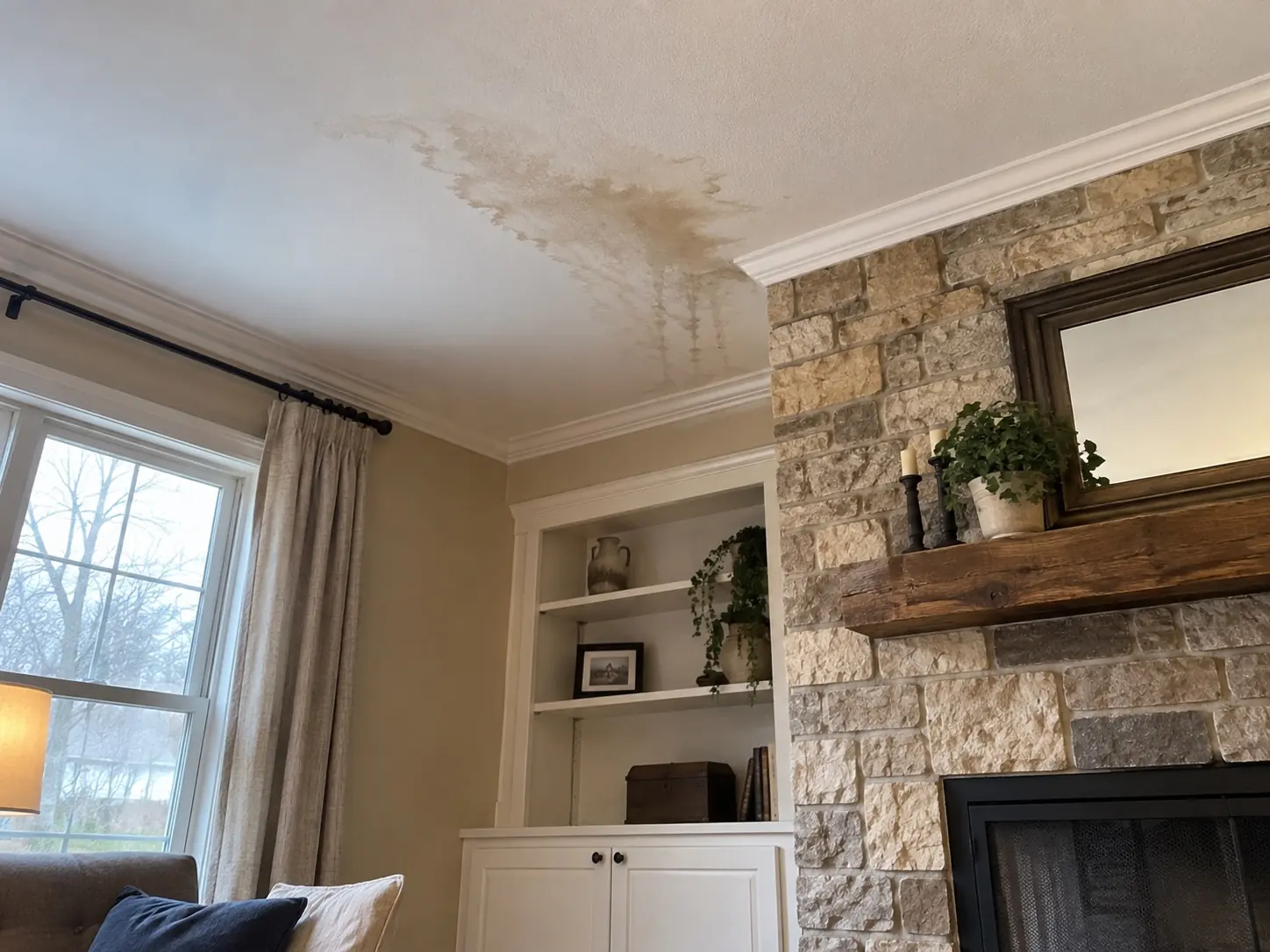
Find the entry point before sealing anything
Most chimney leak repairs that fail, fail because somebody sealed the first thing they saw. Flashing is the usual suspect and often the right one — but a chimney has at least five separate ways for water to get in, and caulking one of them while another is open produces a leak that comes back and a homeowner who has already paid to fix it.
These are the five, roughly in order of how often they turn out to be the cause:
1. Flashing
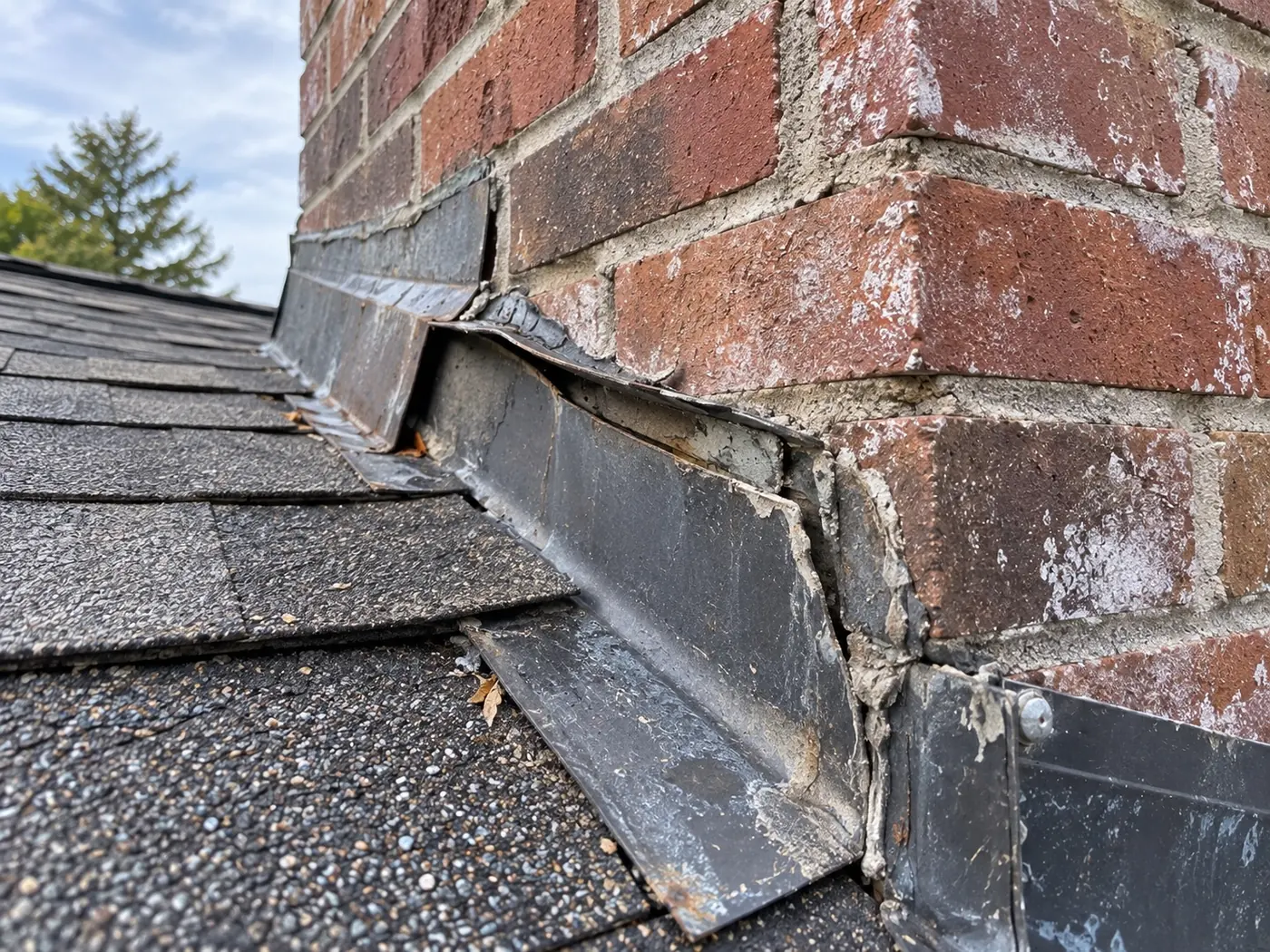
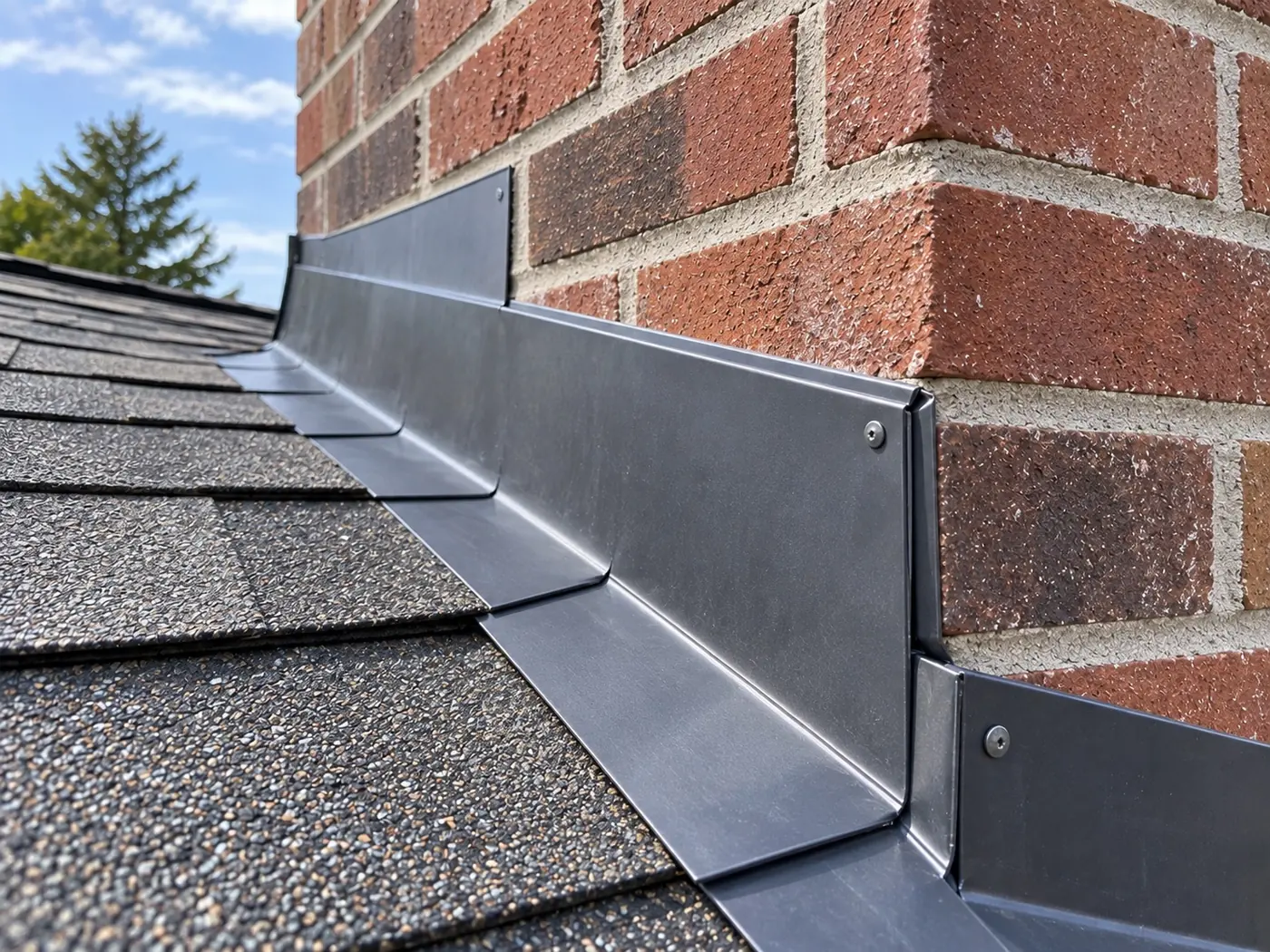
The metal assembly where the chimney passes through the roof. It is the most common source, and the most commonly bodged. Correct flashing is two parts: step flashing woven into the roof courses, and counter-flashing let into a cut in the mortar joint and sealed there. A bead of caulk smeared along the join between brick and roof is neither, and it fails within a couple of seasons as the two materials expand at different rates.
2. The crown
The slab across the top. Cracked or undersized, it dumps water straight into the core of the chimney between liner and brick. Leaks from a failed crown often appear well away from the chimney itself because the water tracks down inside the structure before it finds a way out. → Crown repair is masonry work
3. A missing or damaged cap
An uncapped flue is an open pipe pointing at the sky. Rain goes directly down it onto the smoke shelf and damper. It is the simplest cause on the list and the easiest to confirm.
4. The masonry itself
Brick and mortar are porous. Where joints have receded or brick faces have spalled, the chimney absorbs water through its whole surface rather than shedding it. There is no single hole to find — the structure is the leak. → Repointing and brick replacement
5. Condensation
Not every damp chimney is leaking. An oversized or uninsulated flue serving a gas or oil appliance condenses moisture out of its own flue gases onto the flue walls. It looks like a leak, it stains like a leak, and no amount of flashing work will change it. → Flue sizing and relining
What the timing tells us
When a chimney leaks is diagnostic, and it is the first thing worth telling us.
-
Only in heavy or wind-driven rain
Points towards flashing or the masonry face. Light rain runs off; driven rain is pushed sideways into joints and under flashing laps.
-
Every time it rains, regardless
Points towards the crown or a missing cap — a straight, open path down into the structure that does not need wind to work.
-
In winter but not in summer
Often condensation rather than rain — an appliance flue producing moisture that condenses on cold flue walls. Also consistent with ice damming around the chimney.
-
Hours after it stops raining, or on a delay
Saturated masonry slowly releasing absorbed water. The chimney has become a sponge and the fix is masonry work, not sealing.
-
Worse in summer, with a smell
Usually not a leak at all. Humid air moving down a cool flue over creosote deposits produces a strong odour. That is a draft and deposit problem.
None of this replaces going up and looking. It narrows down where to look first and it stops us charging you to fix something that was never the cause.
Flashing repair
Where flashing is the cause, the repair is a proper two-part assembly rather than sealant. Step flashing goes in with the roofing courses so each piece laps the one below. Counter-flashing is cut into the mortar joint, bent down over the step flashing and sealed into the joint — so water running down the brick face meets metal and is directed out onto the roof rather than behind it.
Done that way it moves with the building and lasts as long as the roof. Done as a caulk bead it is a maintenance item that fails every two or three years, which is why many houses have three generations of failed sealant stacked on top of each other.
Where the roof itself is at the end of its life, flashing work is better coordinated with the roofing rather than done twice.
Related services
What water does once it is inside
The staining on the ceiling is the last symptom, not the first. By the time water is visible indoors it has usually been inside the structure for a while, and it has been doing the following:
- Soaking the masonry so it freezes and spalls faster every winter
- Washing out the mortar joints between clay flue tiles from behind
- Rusting the damper, the firebox components and any metal in the assembly
- Saturating framing and insulation where the chimney passes through the structure
- Producing efflorescence — the white chalky staining on the brick exterior
This is why a chimney leak is worth taking seriously early, and why fixing the leak is often only part of the work. A flue that has had water running through its tile joints for several winters usually needs the liner assessed as well as the leak stopped.
Can you find the leak without getting on the roof?
Sometimes the cause is obvious from the ground or from inside — a missing cap, an obviously failed crown, visible spalling. More often the flashing and crown need to be seen properly, which means going up.
I had the flashing sealed and it still leaks.
That is the single most common thing we are called about. Either the flashing was sealed rather than replaced, or the flashing was never the cause. Both are worth checking before sealing it a third time.
Should I waterproof the chimney to stop the leak?
Not as a first step. Waterproofing is for sound masonry that is absorbing rain. Applied over an active leak or damaged brick it traps water inside and accelerates freeze damage.
There is a stain on the ceiling but the chimney looks fine from outside.
Common. Crown cracks and flashing failures are not visible from the ground, and water tracks down inside the structure before it appears. The absence of visible damage outside does not mean much.
Is a leaking chimney urgent?
It is not an emergency, but it does not stabilise either. Every winter it continues makes the masonry repair larger. Getting it looked at before the freezing season is the sensible time.
Our other chimney services
Chimney leak repair in Cornwall and nearby towns
A leak is traced the same way on any roof. These are the towns around Cornwall where we do it.
Find out where the water is actually getting in
Before anything is sealed. Tell us when it leaks — that alone narrows the cause.