How Often Should a Chimney Be Swept?
Chimney Sweep Cornwall NY · Updated September 2026 · All chimney advice
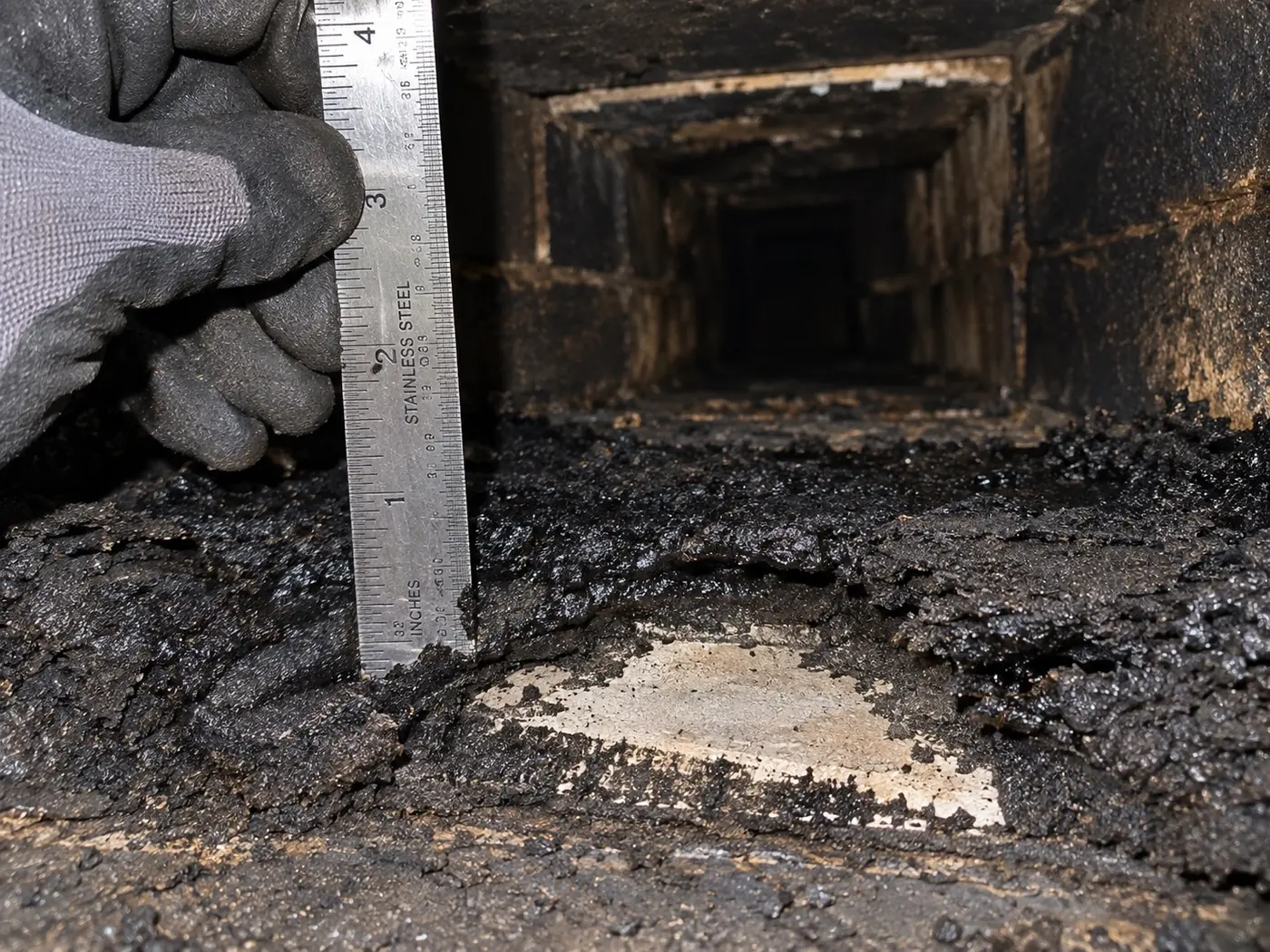
Once a year is the usual answer, and it is the right interval for having the chimney inspected. Sweeping is a different question, and the standard treats it differently. Two houses on the same street can need completely different sweeping intervals.
Where “once a year” comes from
NFPA 211, the standard covering chimneys, fireplaces and vents, calls for them to be inspected at least once a year for soundness, freedom from deposits and correct clearances — and for cleaning, maintenance and repairs to be done if necessary.
The two halves are not the same commitment. The annual obligation is the inspection. Cleaning is conditional on what that inspection finds, and the standard ties it to measurable deposits rather than to the calendar.
So a flue that has barely been used may not need sweeping at its annual check. A flue run hard since spring may need it twice. Both are consistent with the standard; neither is described by “once a year”.
The annual part is not arbitrary. Nearly half of home heating equipment fires happen in the three months from December to February, according to NFPA's fire data. Checking the system before the season starts is deliberate timing, not a formality.
What actually drives the interval
Creosote accumulation is the variable. Five things change how fast it builds:
- How much you burn. A fireplace lit a dozen evenings a winter and a wood stove running as primary heat are not remotely the same system.
- Wood moisture. This is the big one. Unseasoned wood spends its energy boiling off water instead of producing heat, so the fire runs cooler and the flue gases condense far more. Wet wood can multiply creosote build-up several times over.
- How you run the appliance. Damping a stove right down overnight for a long slow burn is the classic creosote generator — low temperature, incomplete combustion, cool flue.
- Flue temperature. An oversized, uninsulated or exterior flue stays cooler, so more of what goes up it condenses on the way rather than exiting.
- Fuel type. Softwoods and resinous species deposit more than seasoned hardwood. Gas appliances deposit almost no creosote — but they still produce moisture that attacks mortar joints, so the flue still needs checking.
Put those together and the real rule is: if you burn a lot, burn slow, or burn wood that is not properly seasoned, you need sweeping more often than annually. If you light a fire at Christmas and once in February, you may not need it every year — but you still need the annual look.
The measure sweeps actually use
The practical trigger is depth of deposit. Roughly an eighth of an inch of soot or creosote on the flue walls is the point at which sweeping is called for — at a quarter of an inch it is overdue, and glazed deposits are a problem regardless of how thin they look.
You can get a rough idea yourself. With the appliance cold, scratch the flue wall just above the damper with a fireplace poker or a screwdriver. Soot that comes away as loose black dust is one situation. A hard, shiny, tar-like coating that will not scratch off is another entirely — that is glazed creosote, and a brush will not remove it.
Signs it is overdue regardless of the calendar
- A strong smoky or tarry smell from the fireplace, particularly in humid weather
- Smoke entering the room when the fire is lit and drawing normally otherwise
- Visible black, shiny deposits on the damper or in the smoke chamber
- Debris, soot flakes or tile fragments falling into the firebox
- Fires that are hard to start or will not stay going in an appliance that used to draw well
Any of these means the flue needs looking at now rather than at the next annual check. Debris in the firebox in particular can indicate a liner coming apart rather than a dirty flue.
What about a chimney you never use?
An unused flue does not need sweeping for creosote, but it is not maintenance-free. It still takes rain through the crown and cap, still houses birds and nests, still deteriorates in the freeze-thaw cycle, and — importantly — may still be attached to something. If a furnace, boiler or water heater vents into any flue in that stack, that flue is in daily use even if the fireplace is not.
The practical answer
Have the system inspected before each heating season. Sweep when the inspection says it needs sweeping, which for most regular wood burners is annually and for heavy users is more often. Do not use the calendar as a substitute for looking.
A chimney inspection covers the flue, liner, firebox, damper and accessible masonry. If it finds deposits, you will be told what stage they have reached and what that means — which is the subject of this article.