Creosote: The Three Stages and Why It Causes Chimney Fires
Chimney Sweep Cornwall NY · Updated September 2026 · All chimney advice
Creosote is the reason chimney sweeping exists. Everything else a sweep does is secondary to getting this out of the flue, because creosote is fuel sitting inside a structure that is not built to have a fire in it.
What it is
Wood never burns completely. Along with heat and light, a fire releases unburned gases, tar droplets, water vapour and fine particles, and all of it goes up the flue. As those combustion by-products rise they cool. When they cool below their condensation point they stop being gas and deposit on the flue wall as a residue. That residue is creosote.
The colder the flue and the cooler the fire, the more of it condenses rather than exiting. That is the whole mechanism, and every practical piece of advice about creosote follows from it.
The three stages
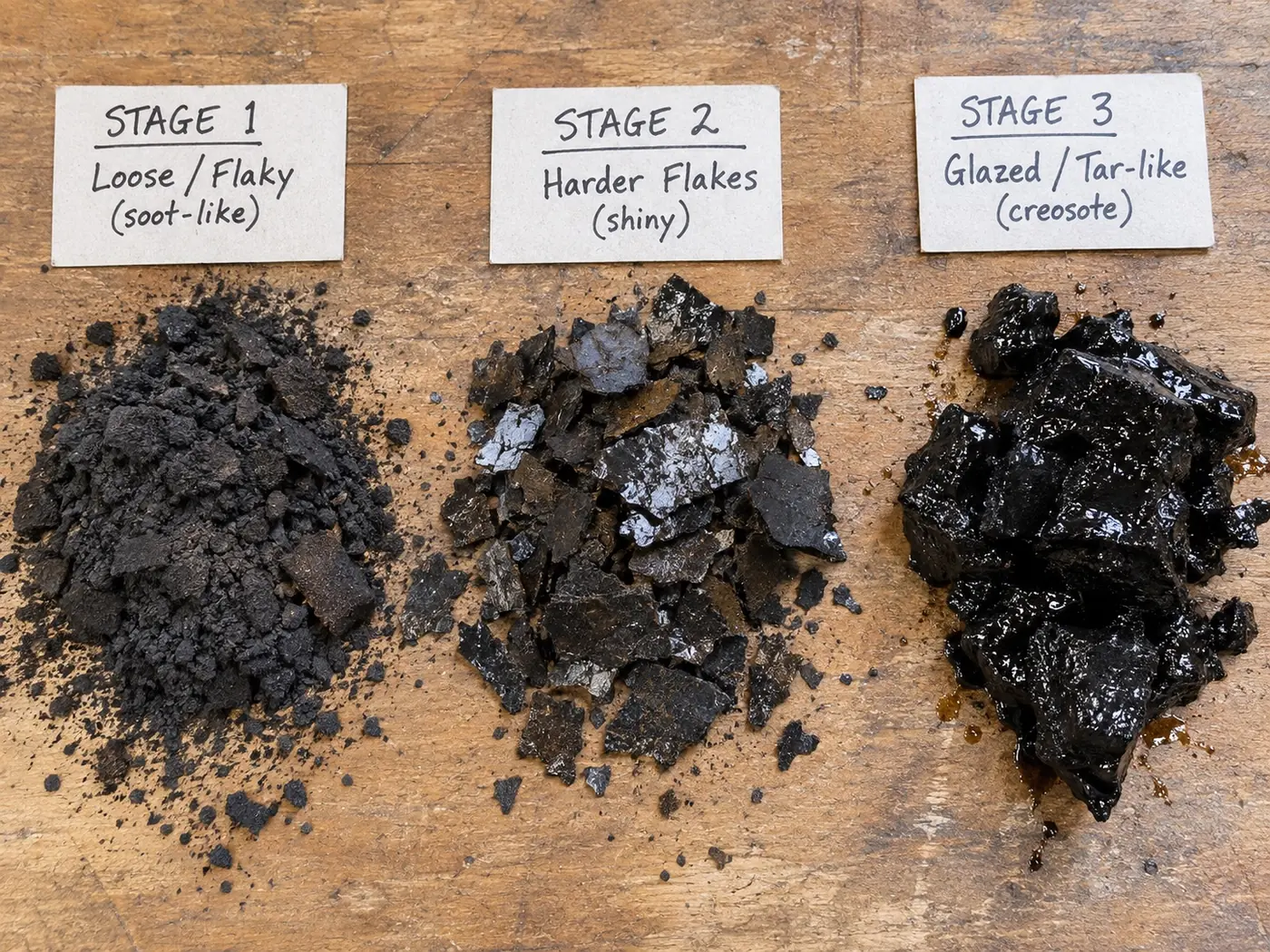
Creosote is usually described in three degrees, and the distinction matters because it determines what can actually be done about it.
Stage one — light, flaky soot
Dry, dusty, black or brown, and loosely attached. This is what a well-run fire in a well-sized flue produces, and it is the easy case. A brush removes it. This is the state you want your flue to be in at the annual sweep.
Stage two — hard, shiny flakes
Dry deposits have been partly re-condensed into brittle, tar-containing flakes that look a little like black cornflakes or coffee grounds. It is harder, sticks better, and needs more aggressive equipment — rotary tools rather than a brush alone. Stage two usually means restricted air supply, a cool flue, or wood that is not as dry as it should be.
Stage three — glazed creosote
A hard, shiny, tar-like coating fused to the flue wall, sometimes running in drips. It is highly concentrated fuel, it is the most dangerous form, and a brush will not touch it. Removing it requires either specialist rotary equipment or chemical treatment that breaks the glaze down over time so it can be removed mechanically afterwards.
Glazed creosote is also the form most associated with serious chimney fires, because it burns hot and it is firmly attached to the surface it will damage.
What a chimney fire does
When creosote ignites, the flue becomes the firebox. Temperatures inside a chimney fire go far beyond anything the structure was designed for, and that is where the damage comes from — not from the flames themselves but from the thermal shock.
Clay tile liners crack. Mortar joints between tiles fail. Stainless liners can buckle or warp. Metal components distort. Afterwards the chimney frequently looks unchanged from outside while the liner has effectively stopped being a liner — and the next ordinary fire is now venting through a breached flue into the structure of the house.
NFPA's fire data puts the scale of it clearly enough: larger fires involving fireplaces or chimneys make up a small share of home heating fires but cause close to a fifth of the direct property damage from them.
A chimney fire — even a small one that appeared to go out on its own — is a specific trigger for a Level 2 inspection with a camera scan. The damage that matters is inside the flue where it cannot be seen from either end.
Slowing it down
You cannot eliminate creosote while burning wood, but you can change how fast it builds and which stage it reaches.
- Burn seasoned wood. Properly dried wood is the single biggest factor. Wet wood spends its energy evaporating water, cools the fire and the flue, and deposits far more.
- Burn hot enough. A brisk fire keeps flue gases above their condensation point so they exit rather than deposit. Long, heavily damped overnight burns do the opposite.
- Give it air. Choking a fire down for a slow burn is the classic way to produce stage two and three deposits.
- Keep the flue warm. An oversized, uninsulated or exterior flue runs colder and condenses more. If that is the situation, an appropriately sized insulated liner changes it.
- Avoid burning rubbish, treated timber and cardboard. They burn dirty and deposit more, and some of them release things you do not want in the flue or the room.
What not to rely on
Chemical creosote removers and "cleaning logs" have a place — they can help break down glazed deposits so they can be swept out afterwards. What they do not do is remove creosote from the chimney. The deposits still have to come out mechanically, and the flue still has to be looked at. Treating a log as a substitute for sweeping leaves the fuel in the flue.
Chimney sweeping removes the deposits; how often you need it depends on how fast your particular setup produces them.